How to Make an Upcycled Art Journal: Sustainable DIY Guide

Ever stared at a pile of junk mail, old receipts, and cardboard and wondered if they could become something beautiful? You can – by turning those scraps into a one‑of‑a‑kind art journal that’s as eco‑friendly as it is expressive. In this guide, I’ll show you how to create an upcycled art journal from recycled materials, step by step.
What Materials Do I Need?
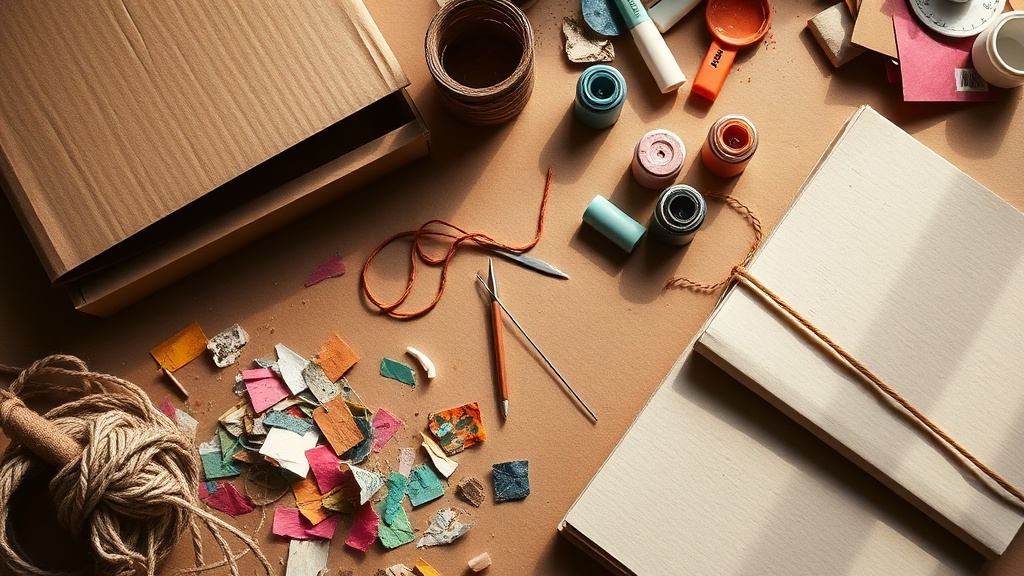
Gather these items before you start. Most are things you already have around the house, or can be sourced sustainably:
- Recycled cardboard (a sturdy cereal box or shipping box works well)
- Scrap paper or old book pages for the interior
- Acid‑free glue or a non‑toxic craft glue
- Needle and strong thread (or a thin twine)
- Scissors or a craft knife
- Paints, inks, or markers for decorating the cover
- Optional: fabric, washi tape, or pressed flowers for extra flair
For a deeper dive on eco‑friendly supplies, check out my Sustainable Art Journal Supplies guide.
How Do I Prepare the Recycled Cardboard?
1. Flatten the cardboard. Open the box and cut it into a single sheet roughly the size you want your journal (A5 works nicely).
2. Trim the edges. Use a craft knife for clean lines. If you prefer rounded corners, gently sand them with fine‑grain sandpaper.
3. Reinforce the spine. Fold a 1‑inch strip along the edge that will become the spine and glue it down. This adds durability.
See my post The ‘Paper Towel Texture’ Trick for quick ways to add texture to covers.
What Binding Techniques Work Best?
There are several simple methods. I’ll walk you through the classic Japanese stab binding, which is perfect for upcycled journals.
- Mark the binding holes. Measure 1 inch from the edge and make three evenly spaced marks along the spine.
- Punch holes. Use a sharp needle or an awl to create clean holes.
- Thread the needle. Cut a length of thread about three times the height of your journal, tie a knot at the end.
- Stitch the pages. Starting from the inside, run the thread through the first hole, across to the opposite side, and repeat the pattern. Finish with a decorative knot.
If you prefer a glued binding, simply apply a generous layer of glue along the spine and press the pages together. For more binding ideas, read How to Create Texture with Gesso.
How Can I Add Personal Touches?
Personalization makes your journal truly yours. Consider these ideas:
- Cover collage. Use junk mail, ticket stubs, or pressed leaves – see my Messy Joy of Collaging for inspiration.
- Color palette. Paint the cover with watercolors or acrylics. I often pick colors by feeling rather than rules – read Forget Color Theory for my process.
- Hand‑stamped title. Use a rubber stamp or carve your own letters into a block of wood.
What Are Common Mistakes to Avoid?
Even seasoned upcyclers slip up. Here’s what to watch for:
- Using glossy paper. It can bleed through and ruin your pages. Stick to matte, acid‑free paper.
- Skipping the spine reinforcement. Without it, the journal will fall apart after a few weeks.
- Over‑tightening the thread. Too tight makes the binding brittle; too loose causes pages to wobble.
- Neglecting sealant. A light spray of acrylic sealer protects your cover from moisture.
Takeaway: Your Upcycled Journal Is Ready
Now you have a fully functional, eco‑friendly art journal made from materials that would otherwise be waste. Use it to sketch, collage, write, or practice any of the prompts I share weekly. Remember, there’s no wrong way to fill a page – the messier, the more personal.
FAQs
- Can I use any paper for the interior? Yes, as long as it’s lightweight and acid‑free. Recycled printer paper works fine.
- How long does the binding process take? About 30‑45 minutes for a small journal; longer if you add decorative stitches.
- Is upcycling better for the environment than buying a new journal? Upcycling reduces waste and the carbon footprint associated with manufacturing new products. According to the EPA’s recycling guide, reusing paper can cut emissions by up to 60%.
Happy creating! 🌿
Steps
- 1
Prepare the recycled cardboard
Flatten, trim, and reinforce the spine of a cardboard sheet to create a sturdy cover.
- 2
Bind the journal using Japanese stab binding
Mark, punch, and stitch holes along the spine with strong thread to securely hold the pages.