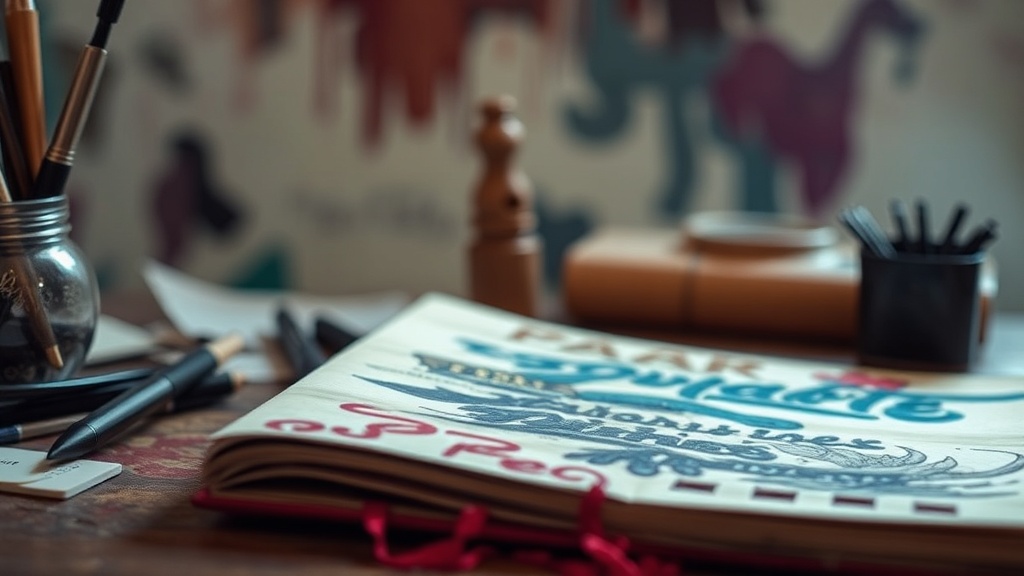
Why Does My Art Journal Feel Stuck and How Do I Break Free?

Why do I feel stuck when I open my sketchbook?
Have you ever sat down with your favorite pens, a stack of scrap paper, and a fresh page, only to find yourself staring at the white space with a heavy sense of dread? It isn't that you lack the ability; it's that you've likely set a standard for what the page *should* look like before you even touch a brush. This mental block—often called a creative rut—usually stems from a desire to make something "pretty" rather than something honest. When we focus on the end result, we lose the ability to play. This post explores how to bypass that internal critic by shifting your focus from the finished piece to the physical sensation of making marks.
The tension between wanting to create and being afraid of failing is a common hurdle in any visual art practice. When we treat our journals like galleries instead of playgrounds, we inadvertently shut down our intuition. To break this cycle, you need to lower the stakes. Instead of aiming for a masterpiece, try aiming for a mess. A mess is much harder to judge than a failed attempt at beauty. By allowing yourself to create something intentionally "ugly," you remove the pressure that keeps your hands frozen.
Can I use cheap materials for mixed media art?
A common misconception is that you need expensive, professional-grade supplies to make interesting art. In reality, some of the best textures in mixed media come from the most mundane, everyday items. If you're feeling stuck, look around your kitchen or junk drawer. A used tea bag can create a beautiful, organic stain on heavy paper, and a bit of old junk mail can provide unexpected typographic elements for a collage. Using "low-stakes" materials actually helps reduce the fear of making mistakes—after all, why worry about ruining a piece of junk mail?
Consider these unconventional sources for your next page:
- Old Newspapers and Magazines: Great for texture and color-blocking.
- Dried Leaves or Pressed Flowers: Adds a natural, ephemeral layer to your work.
- Coffee or Tea: Perfect for creating aged, vintage-looking washes.
- Scraps of Fabric or Thread: Introduces tactile, three-dimensional elements.
When you stop looking at the art store and start looking at your environment, your practice becomes more about discovery and less about acquisition. This shift is vital for anyone looking to build a sustainable, low-stress creative habit. You don't need a curated kit to make a meaningful mark; you just need the willingness to experiment with what is already in front of you.
How do I deal with the fear of a blank page?
The blank page is intimidating because it represents infinite possibility, which can feel paralyzing. To combat this, never start with a white page. Before you even sit down to "work," prepare your sketchbook by adding a messy background. This could be a thin wash of watercolor, a scribble of graphite, or a few random splatters of ink. Once the page is no longer white, the psychological barrier drops significantly. You aren't starting from nothing; you are responding to what is already there.
One effective way to approach this is through the method of "layering and reacting." Instead of planning a composition, make a single, random mark—a line, a circle, or a smudge. Then, look at that mark and ask yourself: "What does this look like?" or "Where can I add more texture here?" This turns the process into a conversation between you and the page. You aren't dictating the outcome; you are participating in a visual dialogue. This approach is a core part of what I call a "vulnerable practice," where the goal is to see where the medium takes you rather than forcing it to go where you want.
If you want to learn more about the technical aspects of layering, I highly recommend checking out the resources at The Spruce Crafts for basic art foundations. Understanding how to build depth through transparency can make your spontaneous marks feel more cohesive. For more advanced texture ideas, exploring the history of collage through The Museum of Modern Art collection can provide endless inspiration for how to use disparate pieces to create a unified vision.
Remember, your journal is a safe space to fail. If a page feels "bad," don't tear it out. Instead, turn it into a background for the next one. The layers of your "failures" eventually become the most interesting part of your art. This is where the true depth of a mixed-media journal lies—in the history of the layers, the mistakes, and the messy transitions that led to the final, complex texture.