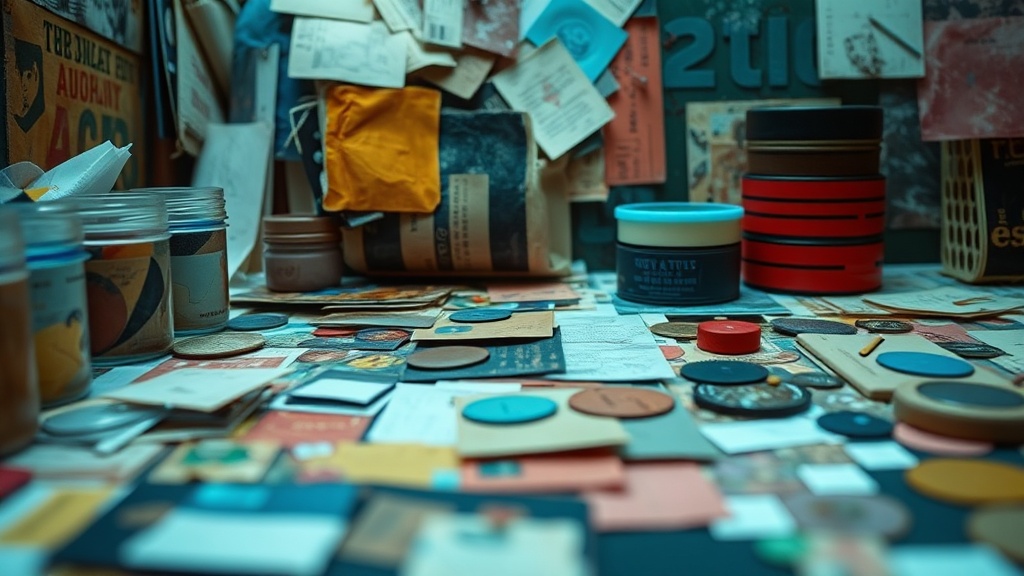
Where Do Artists Find the Most Interesting Collage Materials? (Hint: Not the Art Store)

The Hidden Gold in Your Recycling Bin
Americans throw away approximately 68 million tons of paper and paperboard every single year—and buried in that mountain of "waste" sits some of the most evocative, personal, and visually striking collage material an art journaler could hope to find. This isn't about being thrifty (though that's a nice side benefit). It's about recognizing that the receipts, ticket stubs, handwritten notes, and packaging that pass through your daily life carry emotional weight, visual texture, and narrative potential that no mass-produced scrapbook paper can touch.
Found object collage—sometimes called ephemera art—has roots stretching back to the Dadaists and Surrealists who understood that meaning emerges from juxtaposition. When you glue yesterday's coffee shop receipt next to a watercolor wash, you're not just filling space. You're anchoring your creative practice in the specific, messy, beautiful reality of your actual life. This post explores seven unexpected household items that can transform your art journal pages from pretty but generic into deeply personal visual stories.
What Everyday Papers Work Best for Collage?
The answer depends on what you're after—but variety matters more than perfection. Thin papers like tissue wrapping, sewing patterns, and old book pages create gorgeous layered effects because they become semi-transparent when coated with matte medium. You can see through them, which builds visual depth that flat cardstock simply cannot achieve.
Consider these paper sources hiding in plain sight:
- Security envelope interiors: Those blue and green geometric patterns inside billing envelopes? They're designed to obscure sensitive information, but they also happen to be visually striking abstract patterns. Collect them for months and you'll have a free pattern library.
- Produce stickers and labels: The stickers on your apples and avocados—especially the older, more illustrated varieties—add tiny pops of color and unexpected imagery. Vintage fruit crate labels (reproductions work too) bring bold typography and nostalgic charm.
- Maps and atlases: Outdated road maps create instant atmosphere. The pale yellows, soft blues, and intricate line work of topographic maps suggest journey and place without being literal. Garage sales and library discards are goldmines for old atlases.
The key with paper ephemera is accepting imperfection. Coffee rings, creases, handwritten notes in the margins—these aren't flaws. They're evidence of life having been lived. When you integrate them into your journal, you're creating what artist Teeny Harris called "visual autobiography"—pages that couldn't possibly belong to anyone else.
How Do You Prepare Found Objects for Your Journal?
Not everything can be glued down as-is. Bulkier items need preparation, and some materials require stabilization to prevent deterioration or damage to surrounding pages. The good news? Most preparation is straightforward.
For three-dimensional objects—think buttons, fabric scraps, small hardware, or dried botanicals—you'll want to create pockets, windows, or attachment points rather than flat gluing. Sewing heavy cardstock pockets with a pamphlet stitch allows items to remain removable and interactive. Alternatively, shadow boxes created by stacking layers of foam tape behind a window cut-out can house small treasures while protecting them.
Paper items benefit from de-acidification if you're working with genuinely vintage materials. You can purchase archival mist sprays from conservation suppliers, or simply accept that ephemeral materials may age—and that's part of their charm. For glossy items like photographs or coated packaging, rough up the surface lightly with fine sandpaper before applying adhesive. Matte medium bonds better to slightly textured surfaces.
When working with organic materials like pressed flowers or leaves, ensure they're fully dried (press for at least two weeks) and consider sealing them with a light coat of spray sealant or workable fixative. This prevents crumbling and reduces acidity that could damage adjacent pages over time.
Why Do Personal Materials Create Stronger Emotional Connections?
There's actual neuroscience behind this. Research on nostalgia shows that personally meaningful objects trigger memory networks in the brain more powerfully than generic stimuli. When you look at a concert ticket from last summer glued into your journal, you're not just seeing paper and ink—you're reactivating the sensory experience of that night. The temperature, the music, who you were with. This neurological response creates what psychologists call "extended cognition"—your journal becomes an external storage system for memory and emotion.
This matters because art journaling isn't (or shouldn't be) about making pretty pictures for Instagram. It's about processing experience. When you work with materials that carry personal history, the creative act becomes therapeutic by default—not because you're trying to create art therapy, but because you're externalizing interior experience into tangible form.
The vulnerability of using real ephemera also matters. There's only one copy of that handwritten letter from your grandmother. Using it in your journal requires commitment. You're saying: this moment, this memory, this feeling deserves preservation and attention. That's a radical act in a culture that constantly encourages us to discard and replace.
3 Techniques for Integrating Found Objects
1. The Palimpsest Approach
Named after medieval manuscripts that were written over multiple times, this technique involves layering translucent papers so that text and images ghost through from beneath. Start with a heavier base (perhaps a page from an old dictionary), add a layer of tissue or tracing paper with marks on it, then top with a final layer that might include a photograph or opaque element. The result is visual density that rewards close looking—different stories emerging depending on where the eye focuses.
2. Disrupted Grid Collage
Instead of the traditional cut-and-paste scattered approach, try creating a formal grid structure using found materials. Divide your page into nine equal squares. Fill each with a different type of ephemera—perhaps a stamp in one, a fabric scrap in another, a piece of handwritten note in a third. The constraint of the grid creates tension against the organic, irregular nature of found objects. That tension is visually interesting.
3. The Concealed Element
Some ephemera is too precious or too private to display openly. Create folded pockets, hidden flaps, or behind-the-page windows that conceal while still incorporating. A letter from a difficult time might live behind a painted flap. A photograph of someone lost might peek through a window only when the page is held to light. These hidden layers acknowledge that our journals contain multitudes—not everything needs to be visible to be present.
What About Digital Ephemera?
We're increasingly surrounded by digital ephemera—screenshots, text conversations, digital tickets. Don't exclude these from your practice. The Library of Congress maintains extensive archives of digital materials precisely because they represent contemporary life. Print screenshots on transparency film for layering. Transfer text messages to fabric using inkjet-printable cotton sheets. The principle remains the same: material from your actual life, integrated into your creative practice.
Some artists create entire journals from printed digital content—emails, social media posts, browser history rendered as visual poetry. This isn't lesser than working with "real" physical ephemera. It's simply a different texture of contemporary experience. The goal is authenticity, not analog purism.
Start collecting today. Not buying—collecting. The next time you clean out your wallet, don't discard that crumpled movie ticket. Smooth it out. Look at it. Ask what it remembers that you've already started to forget. Then find it a home in your journal, surrounded by paint and ink and the evidence that you were here, you noticed, you made something from the raw material of your one specific life.