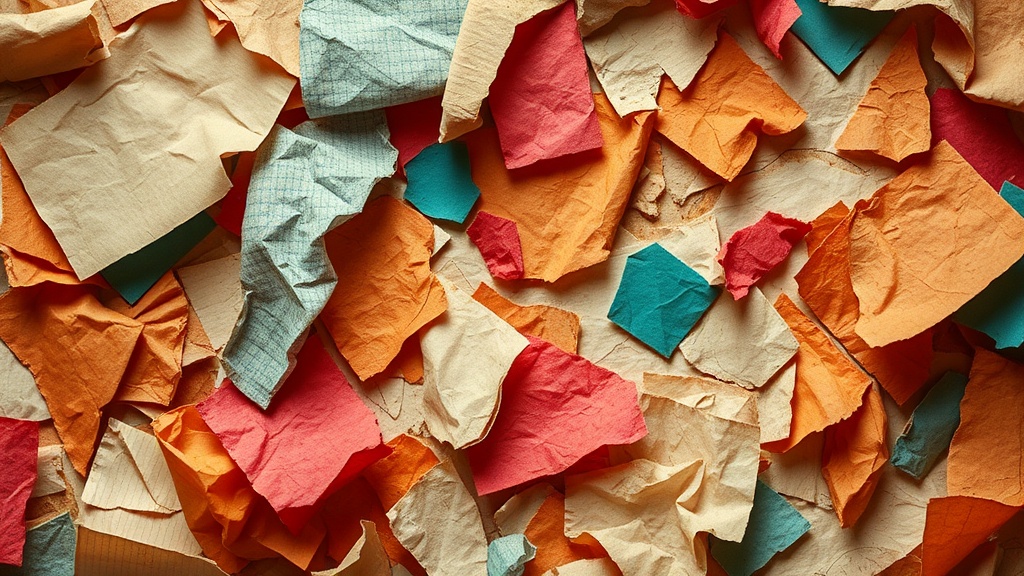
Use Found Paper Scraps to Build Visual Texture

Quick Tip
Look for interesting typography and subtle textures in everyday paper to add depth to your pages.
A blank white page can feel intimidatingly smooth. You might find yourself staring at a flat surface, wishing it had more depth or character, but you're afraid to ruin it with a "bad" drawing. Using found paper scraps is a way to break that tension by adding physical layers and tactile interest to your work without needing to be a master illustrator.
How Can I Add Texture to My Art Journal?
You can add texture by layering torn pieces of paper, old envelopes, or even used tissue paper onto your page using a matte medium or glue stick. Instead of focusing on a perfect drawing, you're building a physical environment. This technique is perfect for those days when you just want to make something "ugly" and tactile rather than a masterpiece.
Think of your journal as a construction site rather than a canvas. You can use scraps of Washi tape for color pops, or old book pages for a vintage feel. It’s much easier to glue a scrap of paper down than it is to draw a perfect circle—a little trick for when you're feeling stuck!
"The goal isn't to make something beautiful; it's to make something that feels real."
What Are the Best Materials for Collage?
The best materials for collage are often the things you’d usually throw in the recycling bin. You don't need an expensive kit from a craft store to get started. Grab a pair of scissors and look around your house.
- Old Mail: Envelopes and flyers provide unexpected colors and typography.
- Brown Paper Bags: These are great for a neutral, organic base.
- Tissue Paper: Use this for translucent layers that soften your colors.
- Scrap Paper: Even a torn-up page from a notebook works perfectly.
If you're worried about the page getting too bulky or stiff, don't be. A little bit of weight gives your journal more soul. If you find yourself struggling to decide where to start, check out these art journal techniques that feel like play.
How Do I Glue Paper to a Journal Without Making It Too Thick?
Use a thin layer of liquid glue or a dedicated matte medium to avoid excessive buildup. The trick is to apply the adhesive to the paper, not the journal page itself, to keep things relatively flat. If you use too much, the paper might wrinkle (which can actually look cool, depending on your style).
| Adhesive Type | Best For... | Texture Result |
|---|---|---|
| Glue Stick | Lightweight tissue paper | Flat and smooth |
| Matte Medium | Heavy scraps or layering | Strong, durable grip |
| Double-Sided Tape | Precise placement | Very low profile |
The catch is that sometimes the "messy" look is exactly what the page needs. Don't be afraid to let the edges stay raw and frayed. It adds a sense of history to your work that a clean, printed image just can't match.