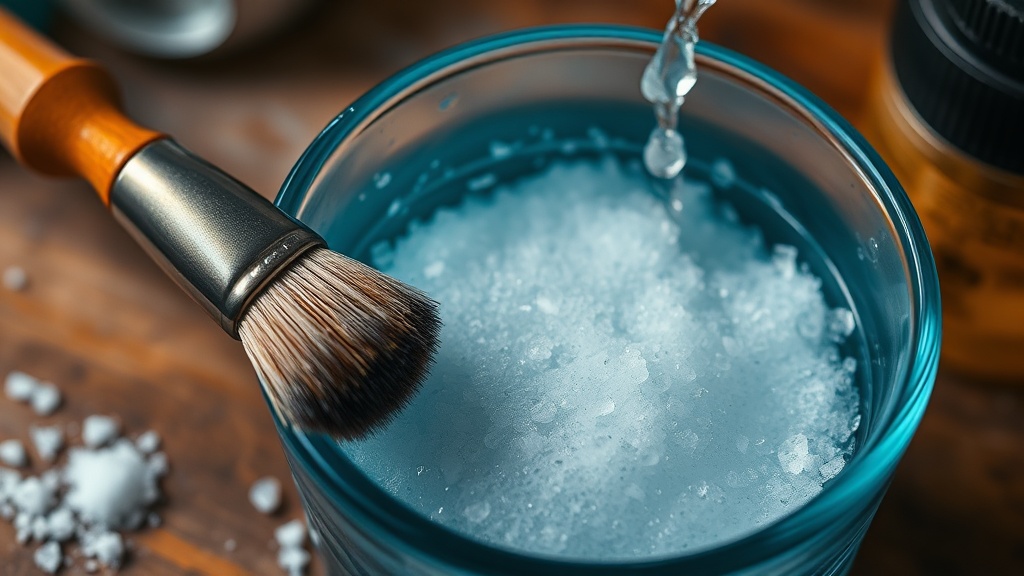
Reviving Brushes: The Saltwater Soak Method

Quick Tip
A gentle saltwater soak can effectively break down stubborn pigment residue in natural hair brushes.
The Myth of the "Disposable" Brush
Many artists believe that once a synthetic brush loses its snap or a natural hair brush becomes stiff from dried acrylics, it is destined for the trash. We often treat brushes as disposable tools, leading to unnecessary clutter and wasted resources. However, a stiff brush isn't necessarily a dead brush; often, it is simply suffering from residual pigment buildup or a pH imbalance in the bristles.
While commercial brush cleaners like The Masters Brush Cleaner & Preserver are excellent for routine maintenance, there is a specialized, low-cost method for reviving brushes that have become truly stubborn: The Saltwater Soak. This technique uses a controlled saline solution to break down stubborn binders and lift deep-seated pigment without the harshness of industrial solvents.
The Saltwater Soak Protocol
Before you start, ensure you are working with a clean glass jar or a ceramic vessel. Avoid using plastic containers that might stain if you are working with heavy pigments like Winsor & Newton Cadmium Red or deep Phthalo Blues.
- Prepare the Solution: Fill your jar with lukewarm water—not boiling, as extreme heat can melt the glue in the ferrule. Add two tablespoons of high-quality sea salt or Epsom salts per cup of water. Stir until the salt is completely dissolved.
- The Initial Submersion: Place only the bristles into the solution. Do not submerge the metal ferrule, as prolonged moisture in the ferrule can lead to rust or loosen the adhesive holding the hairs.
- The Gentle Agitation: Let the brushes soak for approximately 15 to 20 minutes. Every five minutes, use your fingers to gently massage the bristles in a circular motion to help the saline solution penetrate the core of the brush head.
- The Final Rinse: Remove the brushes and rinse them under a stream of cool, fresh water. Repeat the rinsing process until the water runs completely clear and no salt residue remains.
When to Use This Method
This method is particularly effective for brushes that have been neglected after a heavy mixed-media session involving Liquitex heavy body acrylics or thick gesso applications. If you find yourself frequently discarding tools, consider incorporating this ritual into your studio cleanup. It turns a chore into a moment of tactile mindfulness, reminding us that even things that feel "broken" or "stiff" can be restored with a little patience and the right elemental approach.
"A well-maintained tool is a testament to a respectful practice. Don't be afraid to get your hands messy, but don't be afraid to care for your tools, too."