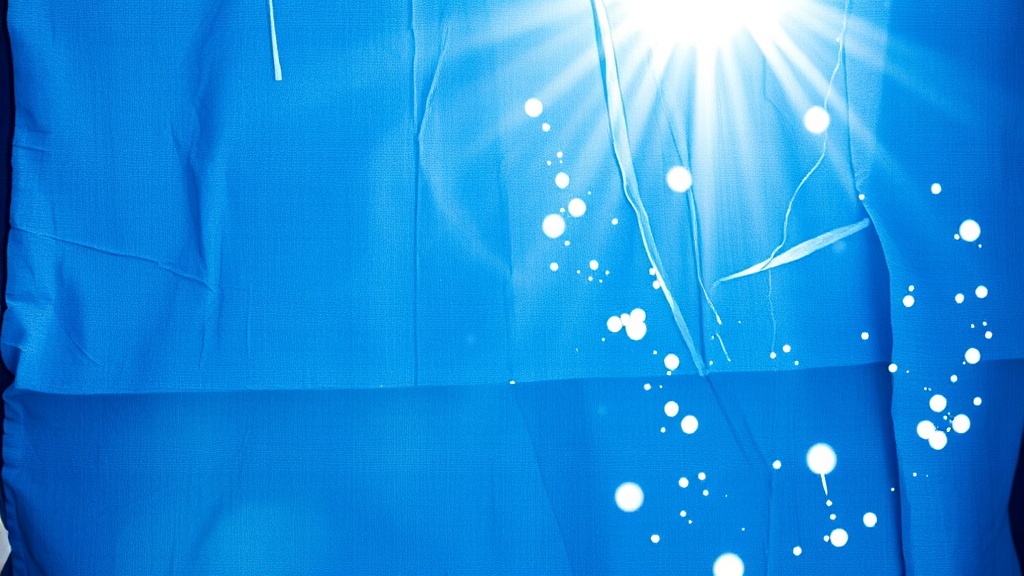
Mastering the Art of Cyanotype: Capturing Sunlight on Fabric

There is a specific kind of magic that happens when you stop trying to control the outcome and start collaborating with the elements. For a long time, my creative practice was a battleground of perfectionism. I wanted every line to be precise and every color to be exactly what I had envisioned. But through years of art journaling, I learned that the most profound breakthroughs often come from the "uncontrollable" moments—the way a watercolor bloom spreads or the way light hits a textured surface. Cyanotype is, perhaps, the ultimate lesson in surrendering control. It is a photographic printing process that uses sunlight and chemistry to create striking, Prussian blue prints. It is elemental, it is messy, and it is deeply restorative.
In this guide, I want to walk you through the technicalities of mastering cyanotype on fabric, but more importantly, I want to invite you to use this process as a way to slow down. In a world that demands instant gratification, cyanotype asks you to wait. It asks you to watch the sun. It is a beautiful way to do a digital detox with your art journal, moving your focus from the glowing screen to the tactile reality of sun-drenched textiles.
Understanding the Science (and the Soul) of Cyanotype
At its core, cyanotype is a light-sensitive process. You are working with two main chemicals: ferric ammonium citrate and potassium ferricyanide. When these are mixed and applied to a surface, they become sensitive to Ultraviolet (UV) light. When UV rays hit the sensitized material, a chemical reaction occurs, creating the iconic deep blue pigment known as Prussian blue. The areas that are covered by an object (your "stencils" or "negatives") remain unexposed and, therefore, stay light or white after washing.
Working with fabric adds a layer of complexity and beauty compared to paper. Fabric absorbs the chemistry differently, and the texture of the weave can add a wonderful organic quality to your final piece. Whether you are working with cotton, linen, or silk, the goal is to create something that feels alive.
Essential Materials Checklist
Before you begin, gather your tools. I highly recommend working in a space that is dim or indoors, as you want to minimize accidental exposure to light during the coating process.
- Cyanotype Sensitizer Kit: You can buy pre-mixed solutions or make your own using Ferric Ammonium Citrate and Potassium Ferricyanide.
- Fabric: Natural fibers work best. Stick to 100% cotton, linen, or silk. Avoid synthetic blends, as they don't absorb the chemicals as effectively.
- A Brush or Foam Applicator: A wide, soft brush is great for a smooth application.
- A Glass or Acrylic Sheet: This is crucial for pressing your objects against the fabric to ensure sharp contact.
- Found Objects: Leaves, flowers, lace, dried ferns, or even translucent scraps of paper.
- A Large Plastic Tub: For the washing and rinsing stages.
- UV Source: Direct sunlight is best, but a UV lamp can also work if you are working indoors.
Step-by-Step: The Process of Sun-Printing
1. Preparing Your Fabric
The most common mistake beginners make is skipping the fabric preparation. If your fabric has any sizing (a starch-like coating) or residual oils, the chemicals won't bond properly. I recommend pre-washing your fabric with a neutral detergent to ensure it is completely "clean." Once washed, ensure it is bone-dry. If you want to experiment with color depth, you might even consider a light soak in a natural dye first, though this is a more advanced technique similar to mastering natural dyeing techniques with indigo.
2. Coating the Fabric (The Dark Stage)
Mix your two solutions according to the manufacturer's instructions. Usually, you mix the two liquids to create a single, yellowish-green sensitizer. In a dim room, pour a small amount of the solution onto a tray or directly onto the fabric. Using your brush, spread the liquid evenly across the surface. You want a thin, consistent layer—not so thick that it puddles, but enough to fully saturate the fibers.
Pro-tip: Once coated, hang your fabric to dry in a dark place or a room with very low light. Do not leave it in direct sunlight while it dries, or you will "pre-expose" it and lose the magic.
3. Composing Your Composition
Once the fabric is dry, it is time for the creative part. This is where you decide what story you want to tell. Lay your fabric flat on a hard surface. Arrange your objects—the dried leaves, the lace, the intricate skeletons of ferns—on top of the fabric. Once you are happy with the arrangement, place your glass or acrylic sheet over the objects. This pressure is vital; it ensures the light can't "leak" under the edges of your objects, creating those crisp, white silhouettes we love.
4. The Exposure
Take your "sandwich" (fabric, objects, and glass) outside into the sun. The time required depends on the intensity of the UV rays and the season. On a bright summer day, it might only take 5 to 10 minutes. On a hazy spring afternoon, it could take 20 minutes or more. Watch for the color change: the fabric will shift from a pale yellow/green to a dull, brownish-grey. This is your signal that the exposure is complete.
5. The Reveal (The Magic Moment)
This is the most rewarding part of the process. Take your fabric back inside and rinse it under running water. At first, it will look a bit messy and brownish. As you rinse, the unexposed chemicals will wash away, and the brilliant blue will begin to emerge. Continue rinsing until the water runs clear. If you want to "stop" the reaction and brighten the blue, you can add a splash of hydrogen peroxide to the water bath. This will instantly turn the fabric a deep, striking Prussian blue.
Embracing the Imperfect: A Note on Vulnerability
As you work through this process, you will likely encounter "failures." Perhaps a leaf slipped, creating a blurry shadow. Perhaps the sun wasn't strong enough, and your blue looks washed out. In my own journey, I had to learn that these are not mistakes; they are the fingerprints of the process. When we strive for perfection, we shut out the soul of the work. When we allow for the "ugly" or the "imperfect," we create something that feels honest.
I often think about how our internal rhythms affect our ability to be present in these slow crafts. Just as we might use a journal reset to boost productivity and sleep, we can use the rhythmic, slow-motion nature of cyanotype to reset our nervous systems. There is a profound sense of peace in watching the sun do the work for you.
Advanced Experimentation and Troubleshooting
Once you have mastered the basic print, the world is your oyster. Here are a few ways to push your practice further:
- Layering: You can print on the same piece of fabric multiple times. Once your first print is dry, lay a new set of objects on top and expose it again. This creates depth and complex, layered compositions.
- Tonal Variations: Experiment with different types of objects. Translucent objects like thin petals or even slices of citrus can create beautiful, soft gradients of blue.
- Mixed Media: Once your fabric is dry and washed, it becomes a canvas. You can use it in an art journal, sew it into a textile piece, or even use it as a background for watercolor painting.
"The goal of art is not to create a perfect object, but to create a perfect expression of a moment in time. Cyanotype captures the light of a specific moment, and that is a beautiful thing to hold onto."
As you move through your spring season, I encourage you to step outside. Whether you are planning plant-forward recipes for a spring brunch or simply gathering fallen blossoms for your next print, let the outdoors be your studio. The sun is the most powerful tool in your kit—use it to illuminate not just your fabric, but your own creative spirit.
Happy printing, and remember: let it be messy. Let it be blue. Most importantly, let it be yours.