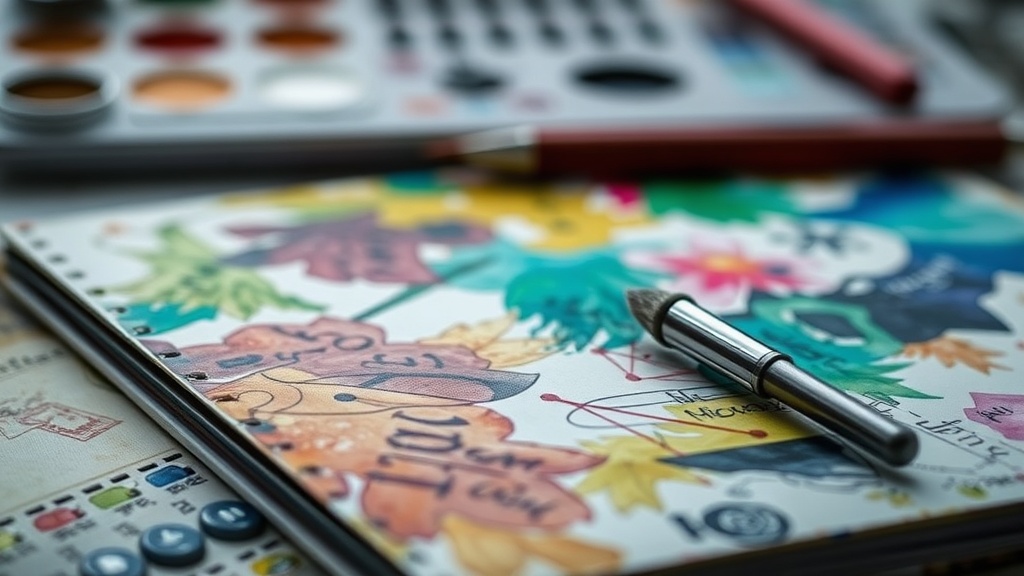
How to Use Mixed Media to Fix Your Sketchbook Pages

A half-finished watercolor wash sits on a heavy 300gsm cold-press paper, looking nothing like the vision in your head. The colors have bled into a muddy brown, or perhaps a single, jagged ink line has completely ruined a delicate composition. This is the moment most artists want to shut the book and walk away. However, mixed media offers a way to transform these "failures" into complex, textured layers rather than scrap pages. This guide explains how to use layering, texture, and collage to reclaim your sketchbook pages when you feel stuck or disappointed with a previous entry.
The Psychology of the "Bad" Page
The urge to rip out a page is often a symptom of perfectionism. When we see a mistake, our brain signals that the page is a failure, but in a mixed-media practice, a mistake is simply an unexpected texture. Instead of viewing a messy page as a lost cause, treat it as a foundation. By adding layers of opaque media over transparent ones, you aren't just hiding a mistake; you are building depth. This shift in perspective helps move your practice away from "making art" and toward "exploring process," which is essential when your sketchbook feels like a chore.
Technique 1: Using Gesso to Reset the Canvas
If a page is truly too messy to work with, you don't have to start a new one. Gesso is your most powerful tool for a "soft reset." Gesso is a thick, opaque acrylic primer that provides a new surface for your art to grip.
White Gesso for a Clean Slate
If you have a page covered in scribbles or unwanted watercolor stains, apply a thin layer of Liquitex Professional Gesso using a wide, flat brush. Do not try to cover everything in one heavy coat, as this can make the paper buckle. Instead, use two or three thin, even layers. This creates a bright, white surface that allows you to start a new composition while still retaining the ghost of the previous textures underneath.
Tinted Gesso for Depth
Instead of pure white, mix a small amount of acrylic paint—like Golden Acrylics in a muted ochre or a soft gray—into your gesso. This creates a "tinted ground." When you paint over this, the color will subtly peek through the edges of your new work, giving the page a sense of history and intentionality. This technique is perfect for covering up a bright, jarring color that doesn't fit your current mood.
Technique 2: Collage and Layering with Ephemera
Collage is the most effective way to physically cover large areas of a "failed" page. When a drawing goes wrong, use paper to reclaim the space.
Using Washi Tape and Scrap Paper
If you have a line you can't un-draw, cover it with strips of washi tape or torn pieces of vintage book pages. The key is to use varying opacities. A piece of translucent tracing paper or tissue paper can partially obscure a mistake without completely hiding it, which maintains a sense of depth. Use a matte medium to adhere these pieces down. A matte medium is preferable to liquid glue because it dries clear and doesn't add unwanted shine that can interfere with your next layer of paint.
Incorporating Found Textures
Gather scraps from your environment: a brown paper grocery bag, a piece of a junk mail envelope, or a dried leaf. These items add a tactile element that shifts the focus from "drawing skill" to "compositional texture." If a page feels empty or "wrong," glue a large piece of torn kraft paper in the center. This creates a new focal point and gives you a structured area to build upon with markers or paint.
Technique 3: Adding Texture with Modeling Paste
Sometimes a page feels "flat" because the mistakes have left it looking one-dimensional. Modeling paste (also known as texture paste) can add physical relief to the surface.
Building Relief with Palette Knives
Use a small metal palette knife to apply Liquitex Modeling Paste over a specific area of the page. You can create ridges, dots, or even swirl patterns. Once the paste is dry, it becomes a permanent, sculptural part of the page. You can then paint over it with acrylics or even use a stencil to create highly detailed patterns. This is an excellent way to hide a large, messy watercolor blotch by turning it into a textured landscape element.
The Stencil Method
If you feel your hand-drawing skills are failing you, use stencils. A stencil provides a controlled shape that contrasts with the "messy" parts of your page. Lay a stencil over a dried area of paint and use a stencil brush or a sea sponge to dab acrylic paint through the gaps. This adds a professional, graphic element that can ground a chaotic page and give it a sense of purpose.
Technique 4: Overpainting and Glazing
Glazing is the process of applying a thin, transparent layer of color over an existing layer. This is a sophisticated way to "fix" a page without losing the work you’ve already done.
The Watercolor Glaze
If you have a page with heavy pencil marks or unwanted ink lines, you can often "wash" them out using a watercolor glaze. Use a highly diluted wash of Winsor & Newton watercolor paint. The transparency of the water will allow the shapes underneath to remain visible, but the new color will unify the page. This is particularly effective for softening the edges of a harsh ink stroke.
Acrylic Glazing for Color Correction
If a color is too bright or "loud," use an acrylic glaze to tone it down. Mix a tiny amount of acrylic paint with a large amount of Acrylic Glazing Liquid or even just water. Apply this over the problematic area. This allows you to shift the temperature of the page—for example, turning a bright, aggressive red into a muted, sophisticated terracotta—without having to scrape the page clean.
Practical Troubleshooting Guide
When you are in the middle of a session and feel the urge to give up, use this quick checklist to decide your next move:
- The page is too dark/muddy: Apply a layer of white gesso or a light-colored tissue paper collage.
- The lines are too heavy/harsh: Use a dry brush technique with opaque acrylic paint to "blur" the edges, or use a stencil to create a new focal point.
- The composition feels empty: Add a large piece of textured paper (like a torn map or junk journal page) to create a new center of interest.
- The colors are clashing: Apply a transparent glaze of a neutral color (like a pale gray or ochre) to harmonize the palette.
Remember that the goal of mixed media is not to create a perfect image, but to engage in a conversation with your materials. Every "fix" is actually a new layer of your story. If you find yourself struggling with the pressure to be "good," you might find it helpful to revisit why you should embrace imperfect lines. The most interesting art often comes from the layers of mistakes we chose to keep and transform.
Steps
- 1
Identify the Problem Area
- 2
Layer with Collage Elements
- 3
Add Texture with Ink or Paint
- 4
Integrate New Details