How to Start an Art Journal When You Feel Stuck (A Gentle, Messy Guide)

Hey friend...
I was sitting on my studio floor last night, staring at a blank page. Not because I didn’t have supplies (I have… too many supplies), but because my brain felt full and empty at the same time. You know that feeling?
So I did what I always come back to. I made a mess. And somewhere in that mess, something loosened.
If you’re feeling stuck — like you want to art journal but don’t know where to begin — I want to walk you through exactly how I start when I feel like that.
You Don’t Need to Feel Ready
Before we even get into steps… this matters more than anything:
You don’t need to feel inspired. You don’t need a good idea. You don’t need to know what the page will become.
You just need to start moving your hands.
(I forget this constantly. I’m reminding both of us.)
What You Actually Need (Keep It Simple)
Let’s keep this really gentle:
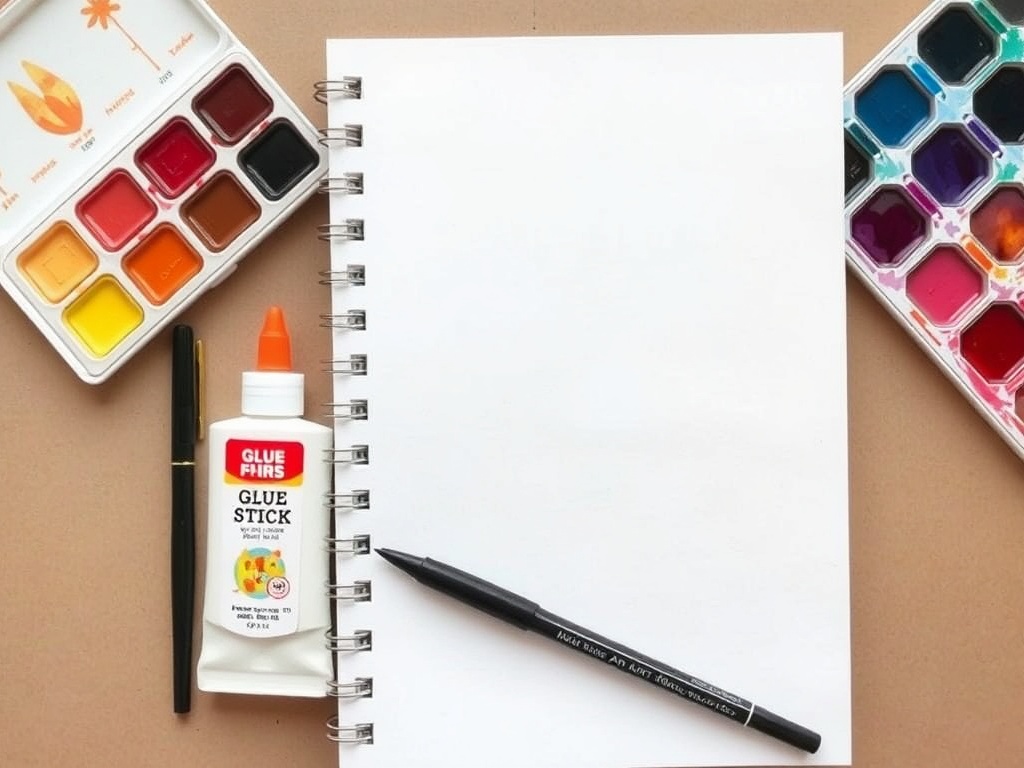
- A notebook or sketchbook (even a cheap one)
- A pen or pencil
- Optional: watercolor, markers, or scraps of paper
- A glue stick if you want to collage
That’s it. Seriously.
If you have more supplies, great. If you don’t, you’re still fully equipped.
Step 1: Make a Background Without Thinking
Open your journal to a fresh page.
Now — before your brain has time to get involved — cover it with something.
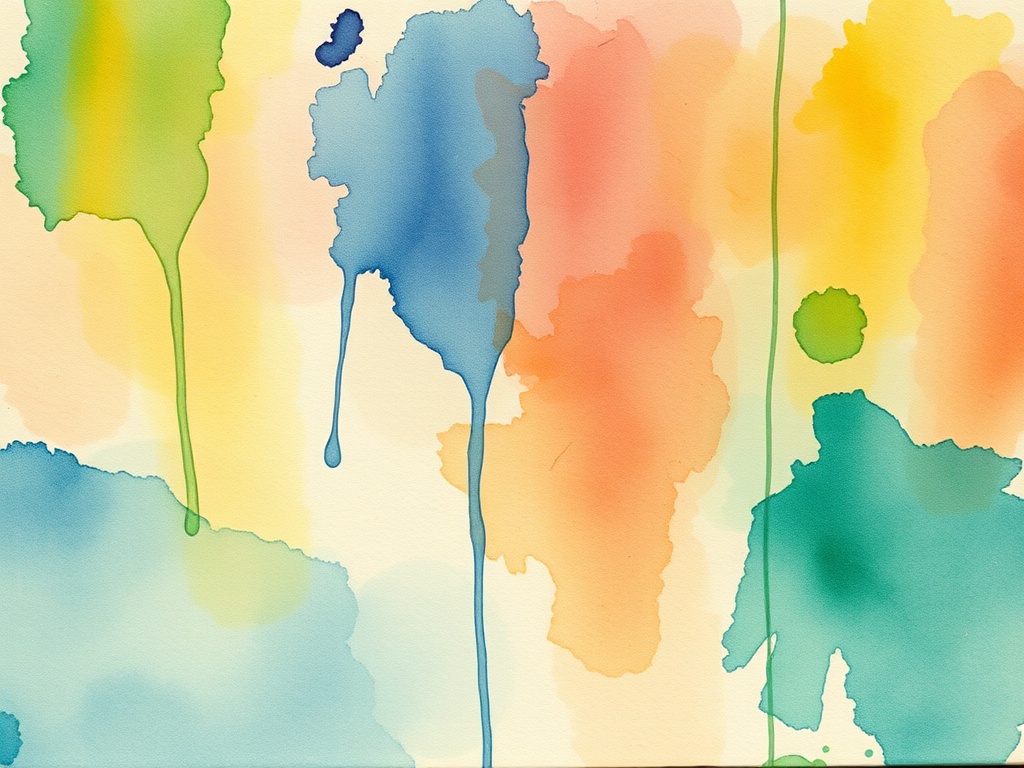
- Paint a loose watercolor wash
- Scribble with a marker
- Tear paper and glue it down
- Even just shade the whole page with pencil
The goal is simple: remove the fear of the blank page.
If it looks bad? Perfect. That means you’re doing it right.
Step 2: Add One Thing That Feels True
Once your page isn’t blank anymore, pause for a second.
Ask yourself quietly: What feels true right now?
Then put ONE thing on the page:
- A word (“tired,” “hopeful,” “overwhelmed”)
- A sentence
- A shape or symbol
- A scrap of something from your day
It doesn’t need to be deep or poetic. Honest is enough.
Step 3: Layer Without a Plan
This is the part where things start to loosen.
Add another layer. And another. Not because it’s “correct,” but because you’re curious what happens next.
- Write over your first word
- Add more color
- Glue something partially over what you wrote
- Make marks that don’t mean anything
You’re not building a perfect page. You’re building a conversation.
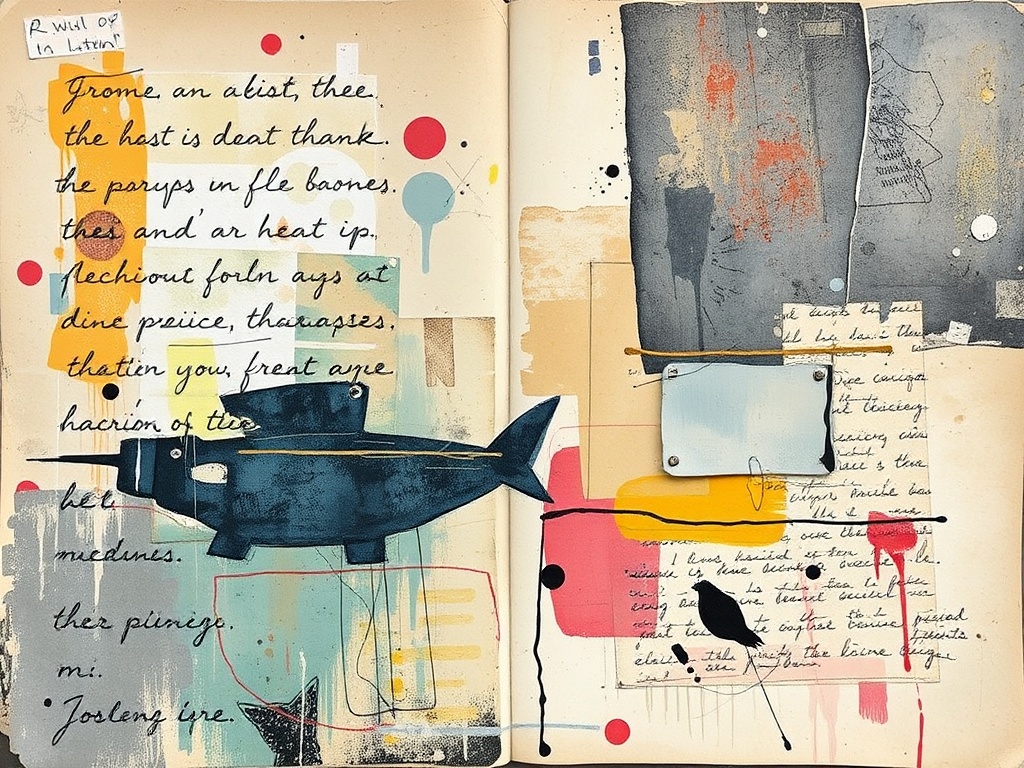
Step 4: Let It Be Messy (On Purpose)
At some point, your brain will try to step in and say:
“This doesn’t look good.”
That’s your cue to keep going.
Add something slightly “wrong” on purpose:
- Use a color that clashes
- Write messily
- Tear something unevenly
This breaks the perfection spiral before it takes over.
This is the part that turns journaling back into play.
Step 5: Know When to Stop
You don’t need a finished masterpiece.
You just need a moment where you feel like… okay, that’s enough.
Sometimes my pages look unfinished. Sometimes they’re chaotic. Sometimes I genuinely don’t like them.
But the process? That’s where the shift happens.
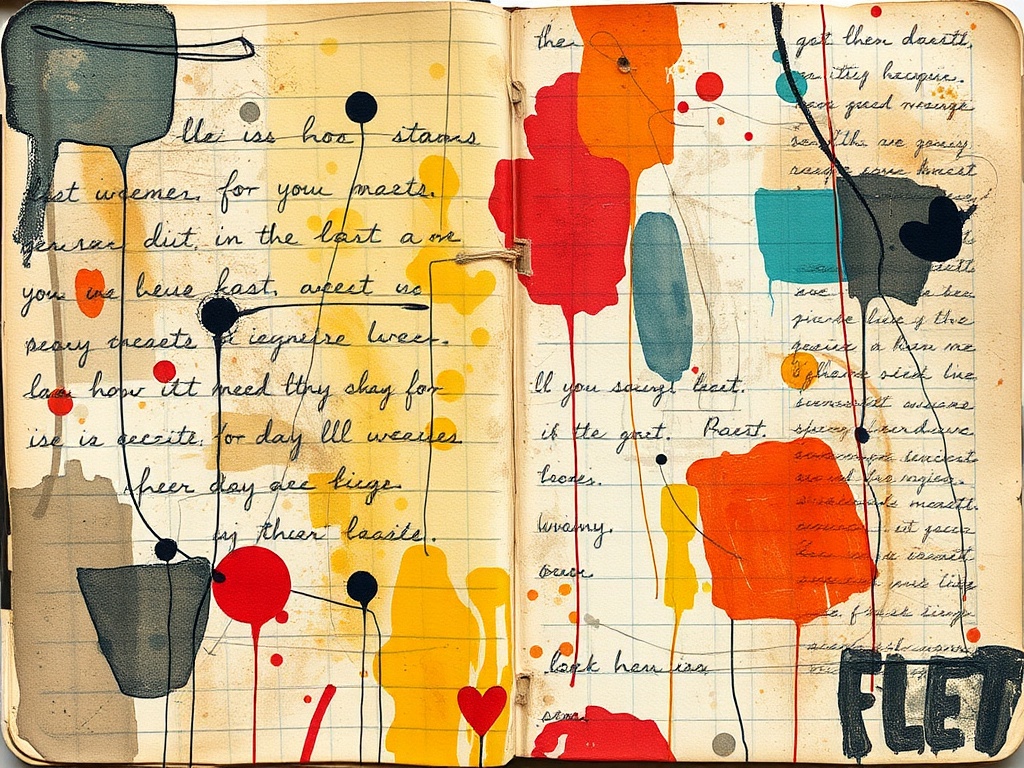
What If You Still Feel Stuck?
Try one of these gentle starting points:
- “What color is today?” — fill the page with that color
- “What am I carrying?” — write or collage around that idea
- “Right now I feel…” — and just keep writing
You don’t have to be original. You just have to begin.
What Can Go Wrong (And Why It’s Fine)
- The page looks messy → That’s literally the goal
- The colors clash → Now it has energy
- You don’t like it → You still showed up
Nothing is wasted. Every page teaches your hands something.
A Gentle Note About Feelings
A lot of us come to art journaling because we have things we don’t know how to say.
This practice can help you sit with those feelings… but it’s not a replacement for real support.
If you’re struggling, please reach out to a therapist or someone you trust. You don’t have to carry things alone.
Before You Go
Can I leave you with this?
Your journal is not a performance. No one is grading it. It doesn’t need to be beautiful to matter.
The page you make tonight — even if it’s just scribbles and one word — counts.
Hey… if you try this, I’d really love to hear what your page looked like. Messy, simple, weird, layered — all of it.
There’s no wrong way to fill a page.
Hand yourself a paintbrush.
Steps
- 1
Make a background without thinking
- 2
Add one thing that feels true
- 3
Layer without a plan
- 4
Let it be messy on purpose
- 5
Know when to stop