
How to Start an Art Journal When You Feel Stuck (A Gentle, Messy Beginner’s Guide)

Hey friend… can I show you something?
I was sitting on my studio floor last night, journal open, staring at a completely blank page. You’d think after all these years it would get easier… but sometimes it doesn’t. Sometimes the page still feels loud. Like it’s waiting for you to do something impressive.
So I did what I always do when that feeling shows up—I made a mess. A watercolor wash that went muddy, some crooked collage, a sentence I immediately wanted to cross out. And somewhere in the middle of that, my shoulders dropped. I could breathe again.
If you’re here because you don’t know how to start… or you’ve tried and felt stuck… this is for you.
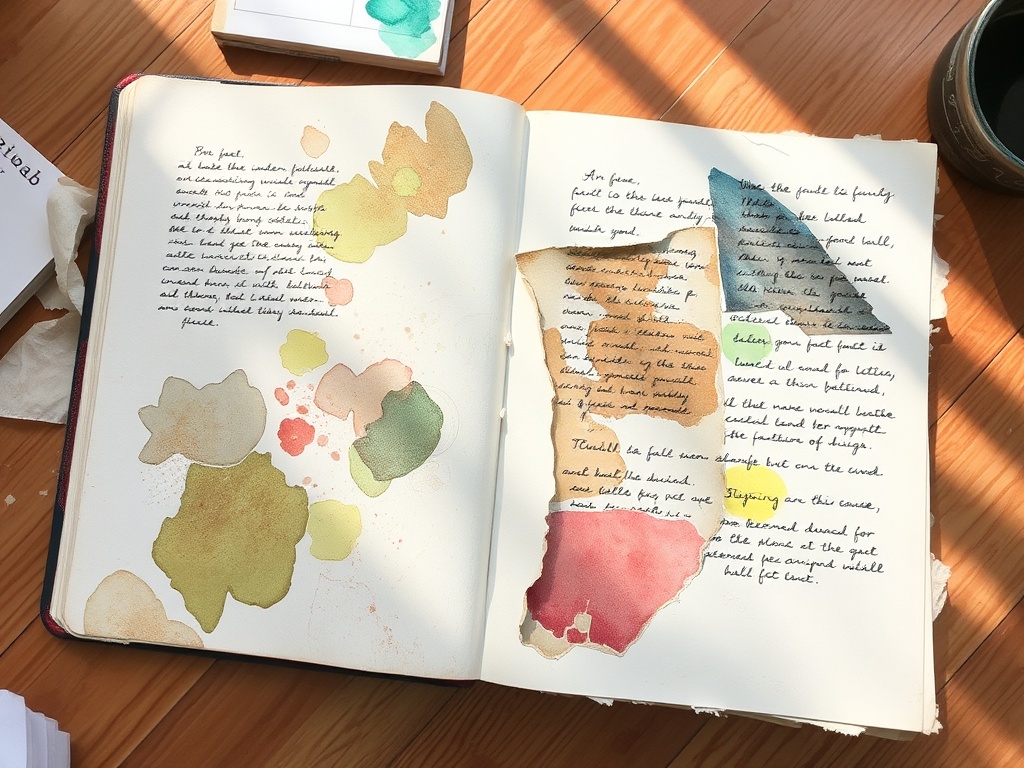
What an Art Journal Actually Is (and Isn’t)
Before we even touch supplies, let’s gently clear something up.
An art journal is not a place where you make beautiful pages for other people to admire. It’s not a sketchbook where everything has to be "good."
It’s a place where you put things you don’t know where else to put.
Feelings. Thoughts. Colors that match your mood. Scraps of your day.
Sometimes it looks like art. Sometimes it looks like chaos. Both count.
There’s no wrong way to do this. I mean that.
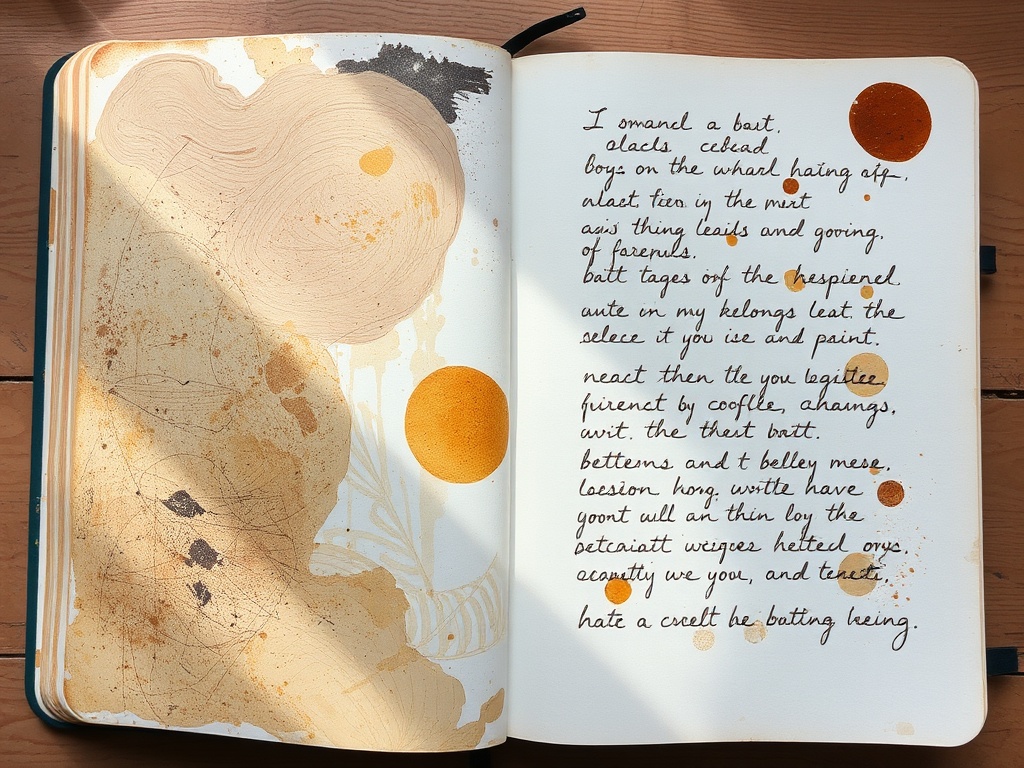
What You Actually Need to Start (It’s Less Than You Think)
Okay. Supplies. This is where people get stuck before they even begin.
You do NOT need a $200 art kit. You don’t need "the right" anything.
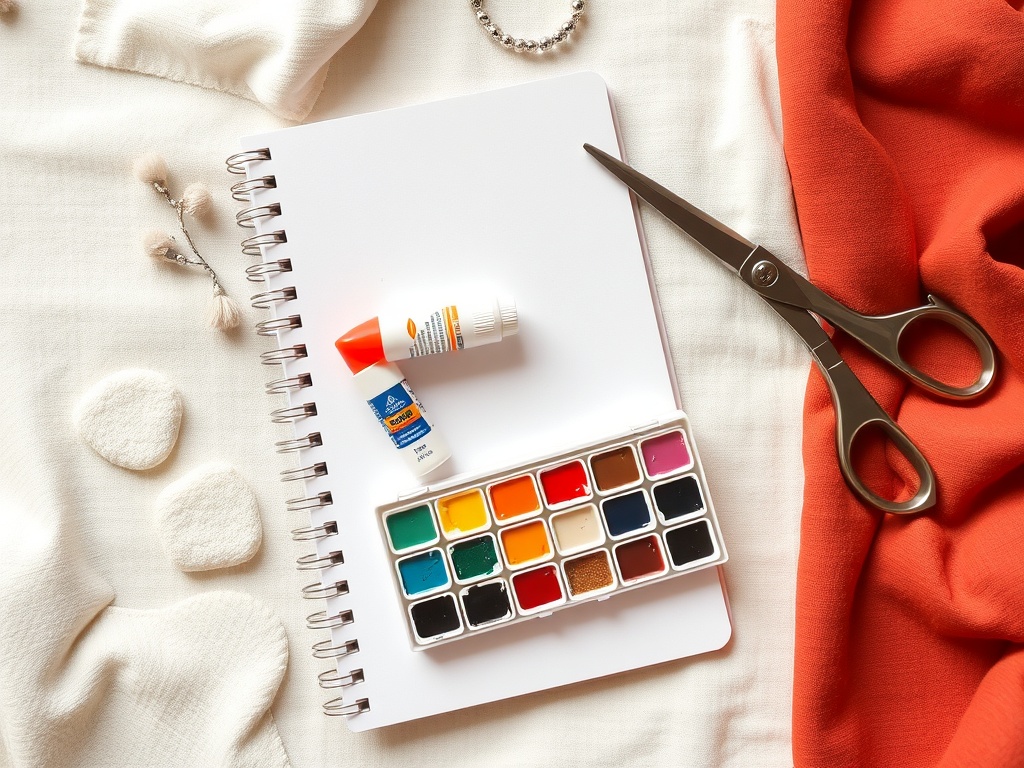
- A notebook (even a $3 composition notebook)
- A pen or pencil
- Something to add color (cheap watercolors, markers, crayons… anything)
- A glue stick (optional, but fun)
That’s it.
I use a mix of things—sometimes nicer supplies, sometimes literal junk mail—but the page doesn’t care what you use. It just wants you to show up.
Step 1: Lower the Bar (Like… Way Down)
This is the most important step, and it has nothing to do with technique.
Instead of asking, “What should I make?” try asking, “What’s the smallest thing I can do on this page?”
Maybe that’s:
- One color brushed across the page
- One sentence written in the middle
- A scrap of paper glued down
You don’t need a full idea. You just need a starting mark.
Momentum comes after, not before.
Step 2: Start with Color, Not Meaning
If you’re feeling stuck, skip the words at first.
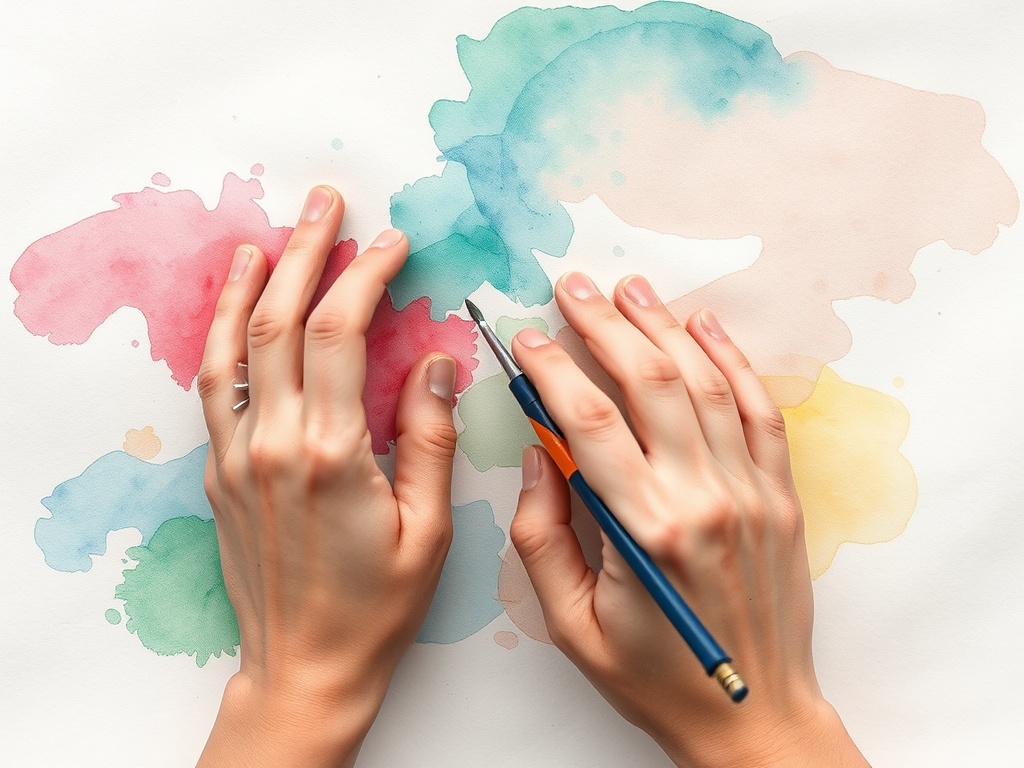
Pick 1–2 colors that feel like your current mood. Not colors you think are pretty—colors that feel honest.
Then just… put them on the page.
A wash, a scribble, a messy background. No plan.
This is your "in." Once the page isn’t blank anymore, your brain relaxes a little.
Step 3: Add Something Unexpected
This is where it gets interesting.
Look around you and grab something random:
- A receipt from your bag
- A page from a magazine
- A piece of packaging
Glue it down. Crooked is fine (honestly, better).
Art journaling isn’t about creating something from nothing—it’s about responding to what’s already there.
Step 4: Write Without Overthinking
Now you can add words… if you want to.
And here’s the trick: don’t try to write something good.
Write something true.
It can be as simple as:
- “Today felt heavy.”
- “I don’t know what I’m doing.”
- “This page is weird and I’m okay with that.”
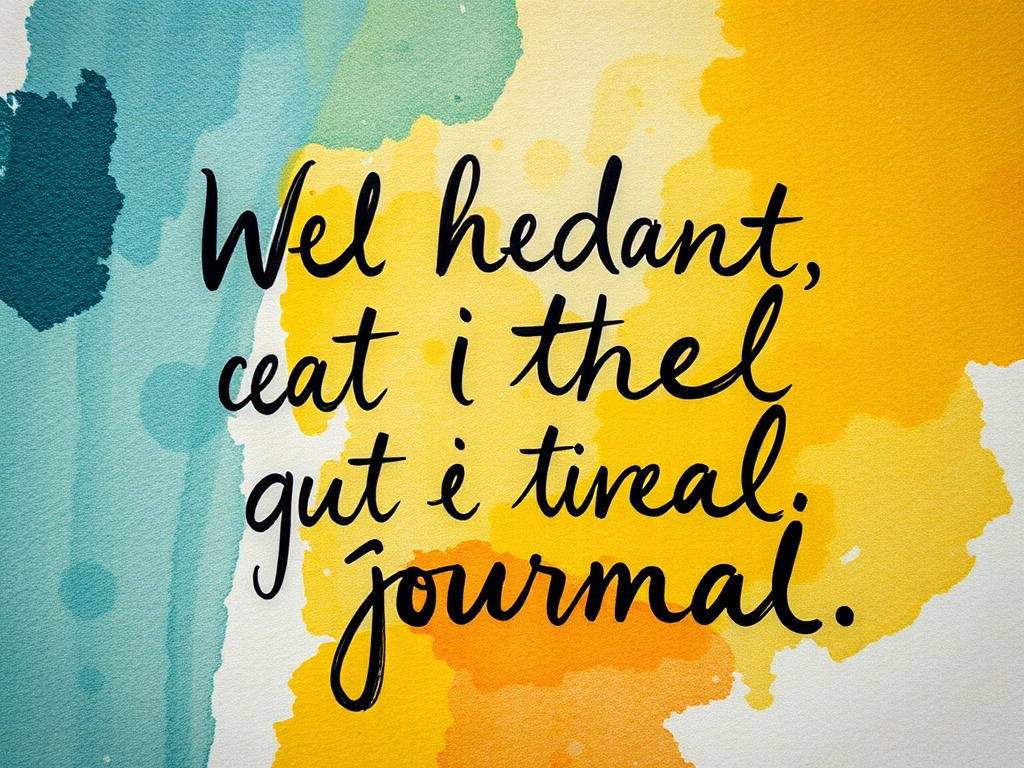
You can write over paint. Around collage. In messy handwriting.
No one else has to read it.
Step 5: Let It Be Done (Even If It Feels Incomplete)
This part is hard.
You’ll probably look at your page and think, “Is that it?”
And the answer is… yes. That’s it.
You don’t need to keep adding until it looks impressive. You can stop when it feels like you’ve said enough.
Some pages will feel unfinished. Those are often the most honest ones.
What Can Go Wrong (And Why It’s Actually Fine)
Let me save you some spiraling:
- The colors get muddy → That’s layering. It happens. It’s part of the texture.
- The page wrinkles → Honestly? Kind of beautiful. It shows the process.
- You hate how it looks → Close the journal. Come back tomorrow. You might feel differently.
- You don’t know what to do next → Stop. That’s a complete page.
Nothing you do here is wasted. Even the pages you don’t love are part of the practice.
A Simple Prompt to Try Right Now
If you’re still feeling unsure, try this:
“What does today feel like?”
- Pick 1–2 colors
- Make a background
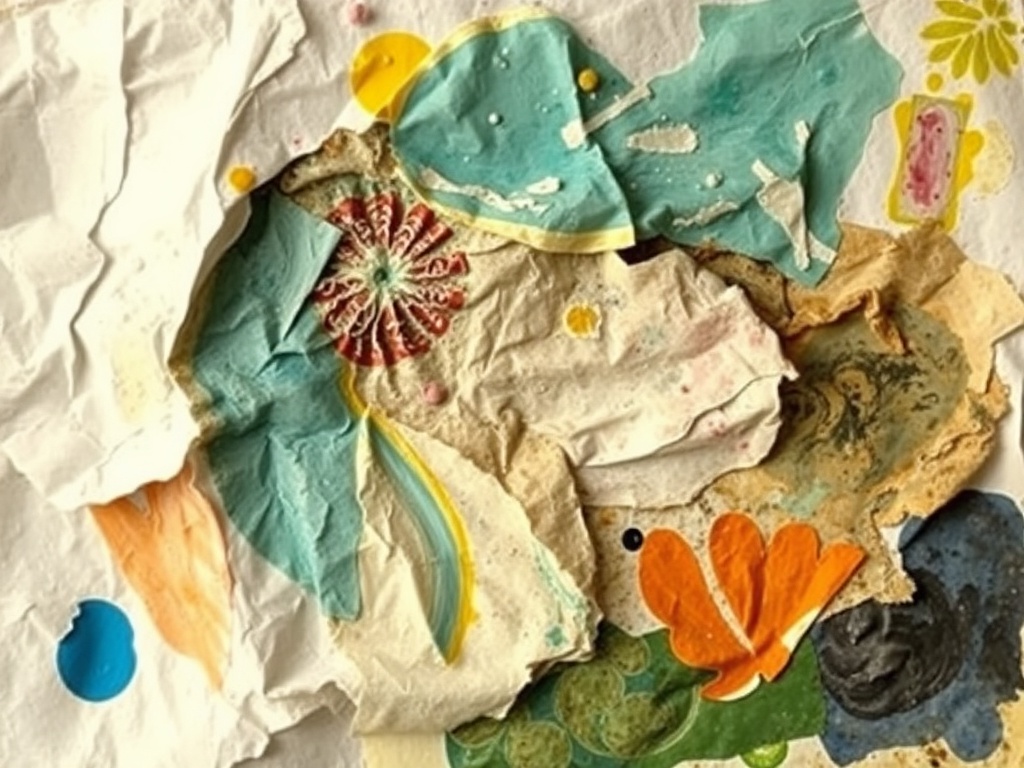
- Add one piece of collage
- Write a single sentence
That’s your page.
That’s enough.
A Gentle Note About Self-Care
A lot of people come to art journaling because they’re overwhelmed, anxious, or just… tired.
This practice can be really grounding. It helps me slow down when my brain won’t.
But it’s not a replacement for professional support. If you’re struggling, please reach out to a therapist or someone you trust. You don’t have to carry everything alone.
Before You Go…
If your page feels messy, incomplete, or a little weird… you’re doing it right.
I mean that.
The goal isn’t to make something beautiful. It’s to make something honest.
So open your journal. Make one mark. Then another.
That’s how this starts.
And hey… if you make a page from this, I’d love to see it. Messy ones especially.
There’s no wrong way to fill a page.