How to Start an Art Journal When You Feel Stuck (A Gentle Beginner’s Guide)

Hey friend… can I show you something?
I opened my journal last night and just… stared at it. Blank page, slightly buckled from old paint, a faint smudge of something from weeks ago. I had no idea what to put on it. Not a single thought that felt worth writing down.
And then I made something anyway. It’s messy. The colors are weird together. I glued a receipt upside down and left it that way. But somewhere in the middle of that mess, I felt my shoulders drop a little.
If you’re here because you feel stuck — like you want to start art journaling but don’t know how — this is for you.
What “Starting” Actually Looks Like
Here’s something nobody tells you: starting an art journal doesn’t look like a beautiful first page.
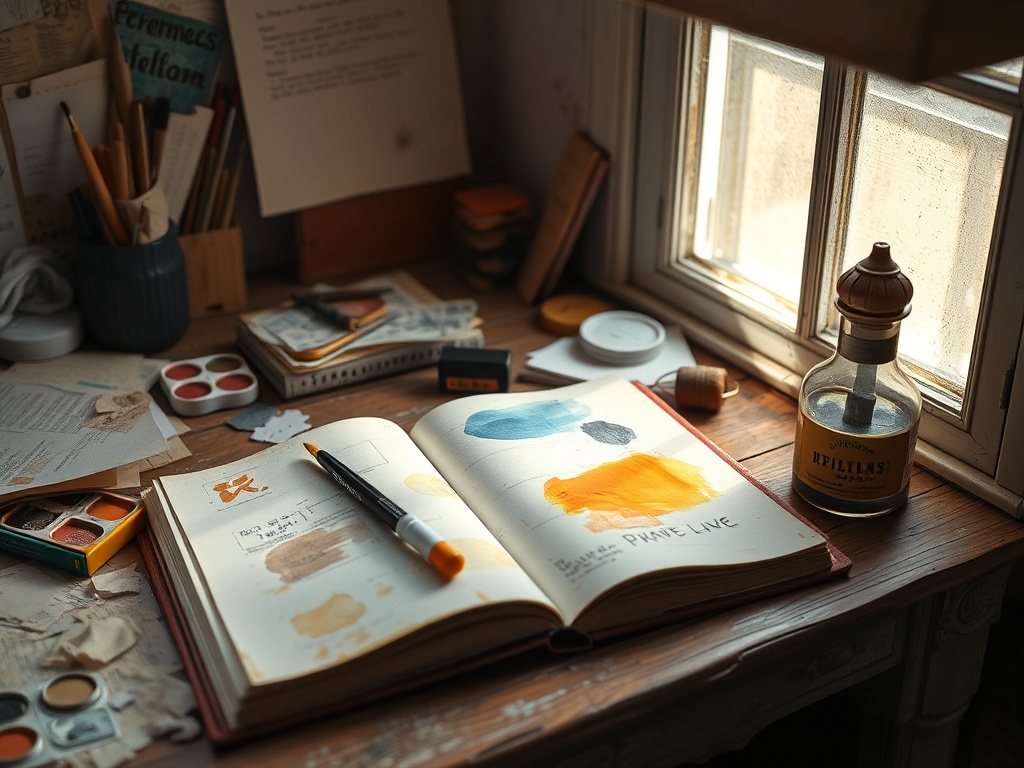
It looks like hesitation. Like flipping through a blank notebook and thinking, “I’m going to ruin this.” It looks like picking up a pen and putting it back down.
That’s normal. That’s part of it.
Art journaling isn’t about making something good. It’s about making something honest. And honesty is usually a little awkward at first.
What You Actually Need (Spoiler: Not Much)
Let’s keep this really simple.
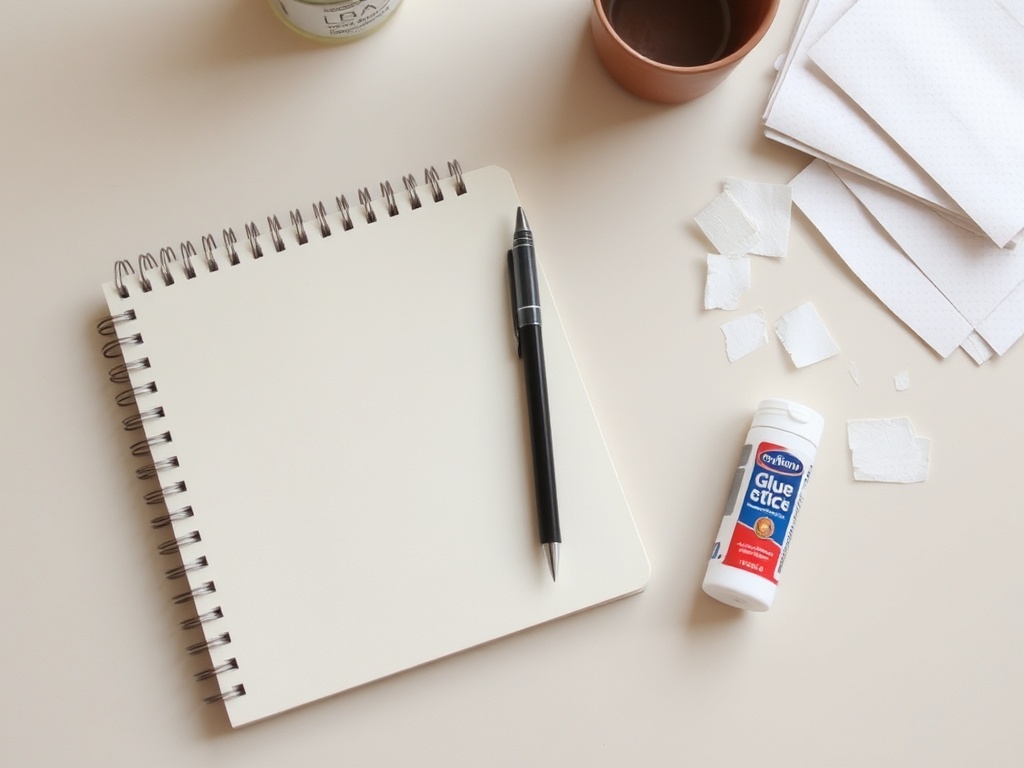
- A notebook (anything — even a cheap one)
- A pen or pencil
- Glue stick (optional, but fun)
- Anything you can stick in: receipts, magazine scraps, old notes
That’s it. Seriously.
If you have more supplies — paints, markers, washi tape — great. If not, you’re not missing anything. The point is the page, not the tools.
A Simple Way to Start (When Your Brain Is Blank)
Okay. Let’s make a page together. No overthinking.
- Pick one color — any color. Doesn’t matter why.
- Put it on the page — scribble, wash, smear, whatever feels easiest.
- Add one thing — a word, a scrap of paper, a line.
- Stop or keep going — both are valid.
That’s a complete page.
I know it sounds too simple. But simple is how you get unstuck.
What If It Looks Bad?
It probably will.
And that’s okay.
Actually… that’s kind of the point.
The first few pages (okay, maybe the first twenty) might feel awkward. The colors might clash. The composition might feel off. You might hate it a little.
But here’s the thing: those pages are doing important work. They’re teaching your hands how to move again. They’re helping you get comfortable with not knowing.
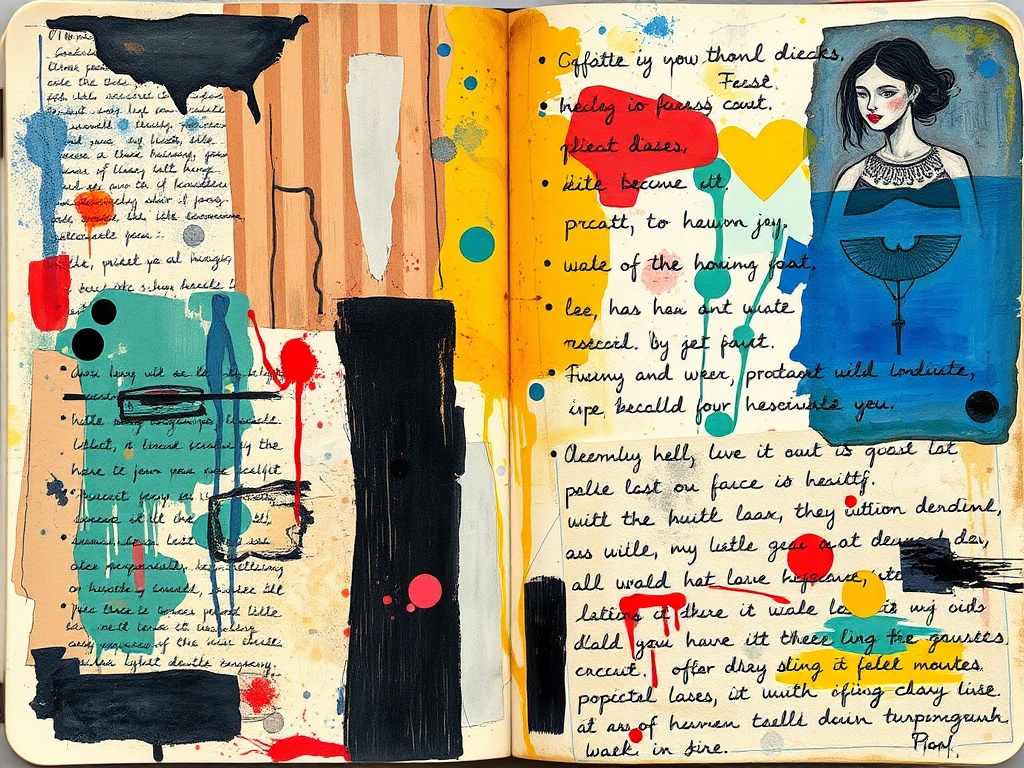
This page is a mess and I love it — is something I say a lot, and I mean it every time.
Try This Gentle Prompt
If you’re still not sure what to put on the page, try this:
“What does today feel like?”
Not what happened. Not what you did. Just… what it felt like.
Maybe it’s a color. Maybe it’s a word. Maybe it’s a shape or a texture.
You can’t get this wrong. There is no correct answer.
Let Yourself Be Bad At It
This might be the hardest part.
Most of us were taught that if something doesn’t look good, it’s not worth doing. That art is for people who are “talented.”
I don’t believe that. Not even a little.
Art journaling is a practice. Like stretching in the morning. Like taking a walk. You don’t need to be good at it — you just need to show up.
And honestly? The “bad” pages are usually the most honest ones.
What Can Go Wrong (And Why It’s Fine)
- The page wrinkles → It adds texture.
- The colors get muddy → That’s a mood.
- You glue something crooked → It’s more interesting that way.
- You hate the whole thing → Turn the page. Try again tomorrow.
Nothing is wasted here. Every page counts.

Making It a Gentle Habit
You don’t need to journal every day. You don’t need a schedule.
But if you want to come back to it, try this:
- Leave your journal somewhere visible
- Keep supplies simple and accessible
- Give yourself 5–10 minutes (that’s enough)
Some days you’ll make a full page. Some days you’ll just draw a line. Both count.
A Note About Self-Care
Art journaling can feel calming. It can help you process things. It can give your hands something to do when your mind is loud.
But it’s not a replacement for professional support. If you’re struggling, please reach out to a therapist or a trusted resource. You deserve real support alongside your creative practice.
Before You Go…
If you take one thing from this guide, let it be this:
You don’t need to be ready to start.
You can start messy. You can start unsure. You can start with a page you don’t even like.
There’s no wrong way to fill a page.
And if you do make something — messy, weird, simple — I’d love to see it. Or keep it just for you. That’s just as valid.
Go make something with your hands…
Renna