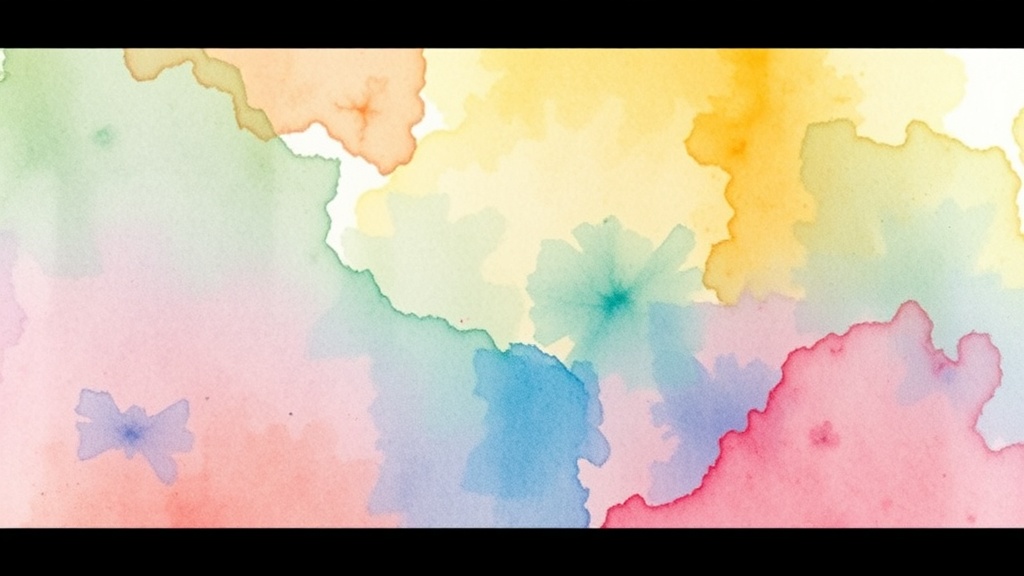
How to Create Beautiful Watercolor Wash Backgrounds

Watercolor wash backgrounds form the foundation of countless mixed-media art journal pages, greeting cards, and standalone paintings. This guide walks through the techniques, supplies, and mindset needed to create dreamy, atmospheric washes—from soft ombre fades to bold gradient blends—that transform blank pages into inviting spaces for creative exploration. Whether you're filling a background before adding collage elements or creating a standalone piece, mastering washes opens up endless possibilities for your visual practice.
What supplies do you need to start making watercolor wash backgrounds?
You don't need much. A few quality materials make all the difference between frustrating muddy puddles and those satisfying, luminous washes you see on Instagram.
Paints: Tubes vs. Pans
Tubes offer intense, saturated pigment straight from the package—perfect for mixing large quantities of wash. Winsor & Newton Cotman tubes provide excellent student-grade options without breaking the bank. Pans (like those in the Schmincke Horadam sets) work beautifully too, though you'll need to activate them with water first. Here's the thing: either format works. Choose based on budget and workspace.
Brushes for Washes
Big, thirsty brushes rule here. A 1-inch flat wash brush or a size 12-16 round holds enough water to paint an entire journal spread without reloading. Natural hair (sable or squirrel) carries more water than synthetic, though modern synthetics like Princeton Neptune perform admirably at half the price. Don't use tiny detail brushes for backgrounds—you'll fight the paper the entire time.
Paper Matters (More Than You Think)
Cheap paper buckles, pills, and dries unevenly. For smooth washes, use paper weighing 140lb (300gsm) or heavier. Cold press offers subtle texture that catches light beautifully. Hot press creates glass-smooth surfaces perfect for detailed work layered over washes. Worth noting: Arches, Fabriano Artistico, and Strathmore 400 Series watercolor pads all handle wet washes without warping excessively.
The Supporting Cast
- Two water containers (one for clean water, one for rinsing)
- Paper towels or a clean rag for lifting color and controlling puddles
- Masking tape for securing edges and creating crisp borders
- A board or plastic surface underneath to catch overflow
- Hair dryer (optional but handy for impatient painters)
| Supply | Budget Option | Investment Option | Best For |
|---|---|---|---|
| Watercolor Paint | Winsor & Newton Cotman tubes | Daniel Smith Extra Fine | Beginners, color mixing practice |
| Paper (9x12 pad) | Canson XL Watercolor | Arches Cold Press Block | Practice, finished pieces |
| Wash Brush | Princeton Select Flat Wash | Da Vinci Cosmotop Spin Wash | Large backgrounds, even coverage |
| Palette | White ceramic plate | Mijello Mission Gold palette | Mixing, keeping colors clean |
How do you create a smooth gradient watercolor wash?
The wet-on-wet technique creates seamless, cloud-like transitions between colors. Here's how to control the process instead of letting it control you.
Step-by-Step: The Classic Wet-on-Wet Wash
- Tape down your paper. Seriously. Even heavy paper buckles when saturated, and dry paint pools in valleys creating unwanted blooms.
- Mix plenty of paint. Running out mid-wash creates hard lines that ruin the gradient. Mix double what you think you need.
- Pre-wet the paper. Use clean water and a large brush to evenly dampen the entire area. The surface should glisten but not pool.
- Drop in color. Touch your loaded brush to the wet paper and watch the pigment explode outward. Work quickly—wet paper won't wait.
- Add second colors. While the first color is still wet, introduce adjacent hues. They'll merge organically at the edges.
- Tilt and guide. Angle your board slightly to encourage gentle movement. Gravity helps blend colors.
- Let it dry untouched. Walk away. Hair dryers work in emergencies, but air drying produces the most even results.
Controlling Blooms and Cauliflowers
Those fascinating flower-like patterns—called blooms or cauliflowers—happen when wet paint meets drier areas. Sometimes you want them (texture!). Sometimes you don't. The catch? You can't remove them once formed.
To prevent unwanted blooms: maintain consistent wetness across the paper. Work quickly. Don't go back into drying areas with more water—it'll push pigment outward and create those ring patterns. If blooms appear and you hate them, wait until completely dry, then glaze over with a thin, even wash of the same or similar color.
The Two-Brush Method
For ultra-smooth gradients without visible brushstrokes, use two brushes simultaneously. One carries pigment. The other carries clean water. Paint a stripe of color, then immediately soften the bottom edge with the clean, damp brush. Continue down the page, creating an invisible transition from saturated color to clear water. It takes practice. Your first attempts might look blotchy. That's normal. The thing about watercolor—you're always dancing with unpredictability.
What techniques create texture and interest in watercolor washes?
Flat color gets boring fast. These methods add visual complexity without requiring advanced drawing skills.
Salt Texture
Sprinkle table salt or coarse sea salt onto wet paint. Crystals absorb surrounding water and pigment, leaving star-like patterns when brushed away after drying. The wetter the paint, the softer the effect. Dryer paint produces sharper, more defined textures. Kosher salt creates larger patterns than fine table salt. Experiment on scrap paper first—salt behaves differently on various brands of paint.
Plastic Wrap and Bubble Wrap
Press plastic wrap (Saran Wrap, Glad ClingWrap) onto wet paint, bunching it slightly. Let dry completely—several hours or overnight. Remove to find organic, cellular patterns reminiscent of leaves, stones, or abstract landscapes. Bubble wrap creates uniform circular patterns, almost like scales or pebbles. Both techniques work beautifully for backgrounds that suggest nature without depicting it literally.
Alcohol Drops
Drip rubbing alcohol (isopropyl alcohol) into wet paint using an eyedropper or old brush. The alcohol repels water-based pigment, creating circular bursts and rings. 70% concentration works well; 90% creates more dramatic effects. That said, use sparingly. Too much alcohol can damage paper fibers over time.
Lifting and Blotting
While paint is still damp—not soaking, not bone dry—press a paper towel, cotton ball, or dry brush onto the surface. Lift color back out to create clouds, highlights, or soft shapes. A magic eraser sponge (cut into small pieces) lifts with surprising precision even after paint has dried slightly. This technique builds light areas without reserving white space from the start.
Masking Fluid for Reserved Whites
Winsor & Newton Colourless Art Masking Fluid or Pebeo Drawing Gum protects areas you want to keep white or light. Paint it on with an old brush (it ruins good ones), let dry, then paint your wash over it. Once everything's dry, rub or peel away the masking to reveal crisp white shapes. Use this for stars in night skies, highlights on water, or geometric patterns.
How do you fix mistakes in watercolor wash backgrounds?
Mistakes happen. Pigment pools where you didn't want it. Colors turn muddy. The wash dries unevenly. Here's how to salvage—or embrace—the chaos.
The Lifting Technique
Act fast with a damp brush and paper towel. Blot excess pigment before it sets. For dried mistakes, scrub gently with a stiff damp brush (an old toothbrush works) then blot. You won't return to pure white paper, but you can lighten areas significantly. Some artists keep a dedicated "scrubby brush" just for this purpose.
Glazing Over Problems
Can't lift it? Cover it. Once the area is bone dry, paint a thin, transparent wash of a complementary or neutral color over the mistake. This "glazing" unifies the surface and can turn ugly patches into interesting depth. The thing about watercolor transparency—layers show through, creating complexity rather than hiding completely.
Embracing Imperfection
"There are no mistakes in art journaling—only opportunities for collage."
Sometimes the "ruined" wash becomes the most interesting page. A muddy brown patch? Cover it with white gel pen patterns. A bloom that looks like a coffee stain? Draw around it, incorporate it into a face or flower. Add collage papers, washi tape, or stamped images over problematic areas. Your art journal isn't a museum piece—it's a playground.
Knowing When to Start Fresh
Some washes can't be saved. That's okay. Flip the page. Use the other side. Tear it out and use it for collage fodder. Watercolor paper is expensive, but creative peace is priceless. The catch? You have to actually allow yourself to abandon the occasional disaster without self-criticism.
Advanced Wash Variations to Explore
Once basic washes feel comfortable, push into these territories:
Graded Washes (Value Studies)
Create washes that transition from dark to light using a single color. This builds value control—arguably more important than color mixing. Start with concentrated pigment at the top, add water (not more paint) to your brush as you work downward, allowing the color to gradually fade to white. These monochromatic backgrounds make excellent foundations for black ink illustrations or white gel pen details.
Variegated Washes (Multiple Colors)
Drop complementary colors (blue and orange, red and green) into wet paper simultaneously. Watch them dance at the edges, creating neutral gray-browns where they mix. Or place analogous colors (blue, blue-green, green) for harmonious transitions. The wet paper does the blending—you just provide the pigment and timing.
Dry Brush on Wet
Drag a relatively dry, pigment-loaded brush across wet paper. The bristles skip and scratch, creating texture within smooth areas. This technique suggests grass, hair, water movement, or abstract energy lines. Practice pressure control—too much pressure kills the effect; too little leaves no mark.
Negative Painting
Paint around shapes instead of painting the shapes themselves. Create a wash, let dry, then paint around leaf shapes, circles, or organic forms using a slightly darker version of the same color. Repeat multiple times, going darker each layer, to build dimensional, layered backgrounds that seem to recede into space. This technique requires patience and planning, but produces stunning depth.
Building a Practice Habit
Skill builds through repetition, not perfection. Set aside fifteen minutes for "wash play"—no finished piece required, just paper, paint, and curiosity. Document what works. Note paint brands, paper types, and water ratios that produce results you love. Over time, you'll develop intuition for how wet the paper should be, how much pigment to load, when to step away.
Start simple. Master the flat wash. Then gradients. Then textures. Each technique compounds into confident, expressive backgrounds that make your art journal pages feel cohesive and intentional—even when the content is pure, beautiful chaos.
Steps
- 1
Prepare your materials and wet the paper evenly with clean water
- 2
Apply your first light wash of color while the paper is still damp
- 3
Blend additional colors and let dry completely before adding details